HOW IT WORKS
Heat from the roof
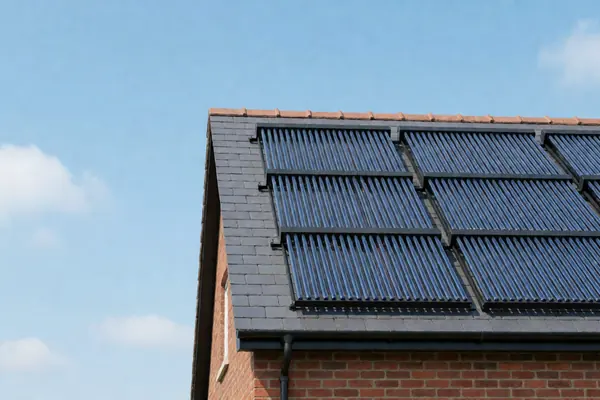
Collectors on the roof warm a mix of water and antifreeze, which is pumped through a coil in your hot water cylinder. They come as evacuated tubes or flat plates.
Is it right for you? homesolarbackup
00WHAT UK GUIDANCE SAYS
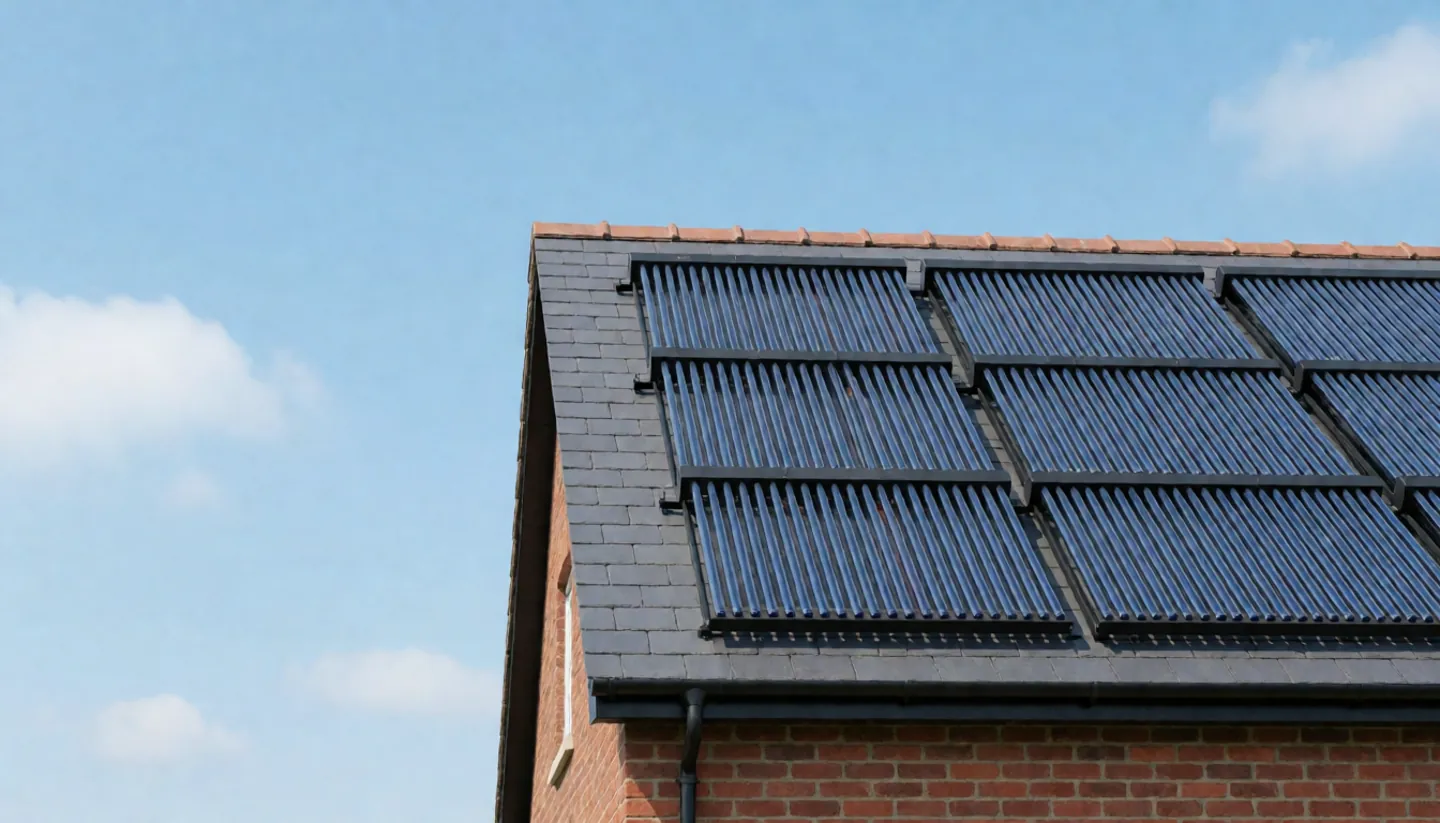
Solar water heating warms the water in your cylinder from the roof.
It works all year, but not equally. The Energy Saving Trust says it covers most hot water in summer and much less in winter, so a boiler or immersion heater makes up the rest.
Check the season01Principles
02THE SHORT ANSWER
Solar water heating is a partner, not a replacement.
Your existing hot water system stays in the picture.
HOW IT WORKS
Collectors on the roof warm a mix of water and antifreeze, which is pumped through a coil in your hot water cylinder. They come as evacuated tubes or flat plates.
Is it right for you?THE BACKUP
The Energy Saving Trust says it should give around 90% of hot water in summer, dropping to around 25% in winter. A boiler or immersion heater makes up the difference.
Check the seasonWHAT IT HEATS
Most systems are designed for baths, showers and hot taps only. They do not send hot water to your radiators, so you still need a way to heat your home.
See the numbers03A QUICK SEASON CHECK
Pick a time of year to see roughly how much of your hot water a solar water heating system provides, according to the Energy Saving Trust. The bar shows the solar share.
Typical figures from the Energy Saving Trust. Your system's share depends on its size, your roof and how much hot water you use.
04TWO NUMBERS WORTH KNOWING
One figure on how much of the bill hot water takes,
one on the price of a typical system.
≈ 11%
Share of the average energy bill
The Energy Saving Trust says hot water accounts for around 11% of the average energy bill, which is the part solar water heating can reduce.
HOT WATER · ENERGY SAVING TRUST
≈ £5,300
Typical installed system
The Energy Saving Trust puts the cost of a typical system at around £5,300, depending on the collector type and the size of system.
COST · ENERGY SAVING TRUST
VAT Notice 708/6 lists solar collectors, with their pipework, pump, storage cylinder and controls, among energy-saving materials whose installation in homes is zero-rated from 1 May 2023 to 31 March 2027, reverting to 5% from 1 April 2027.
05FOUR THINGS TO CHECK
The Energy Saving Trust suggests a few questions that decide whether solar water heating suits a home.
Best on a south-facing roof, or anywhere between east and west but not north, with around five square metres in direct sun for most of the day.
You need a hot water cylinder designed for solar, ideally indoors, though a garage or similar space can work.
A conventional boiler with a cylinder is often compatible. Few combi boilers are, so you may need a cylinder and a different boiler or a heat pump.
Get quotes from at least three installers certified with the Microgeneration Certification Scheme (MCS), choosing solar thermal.
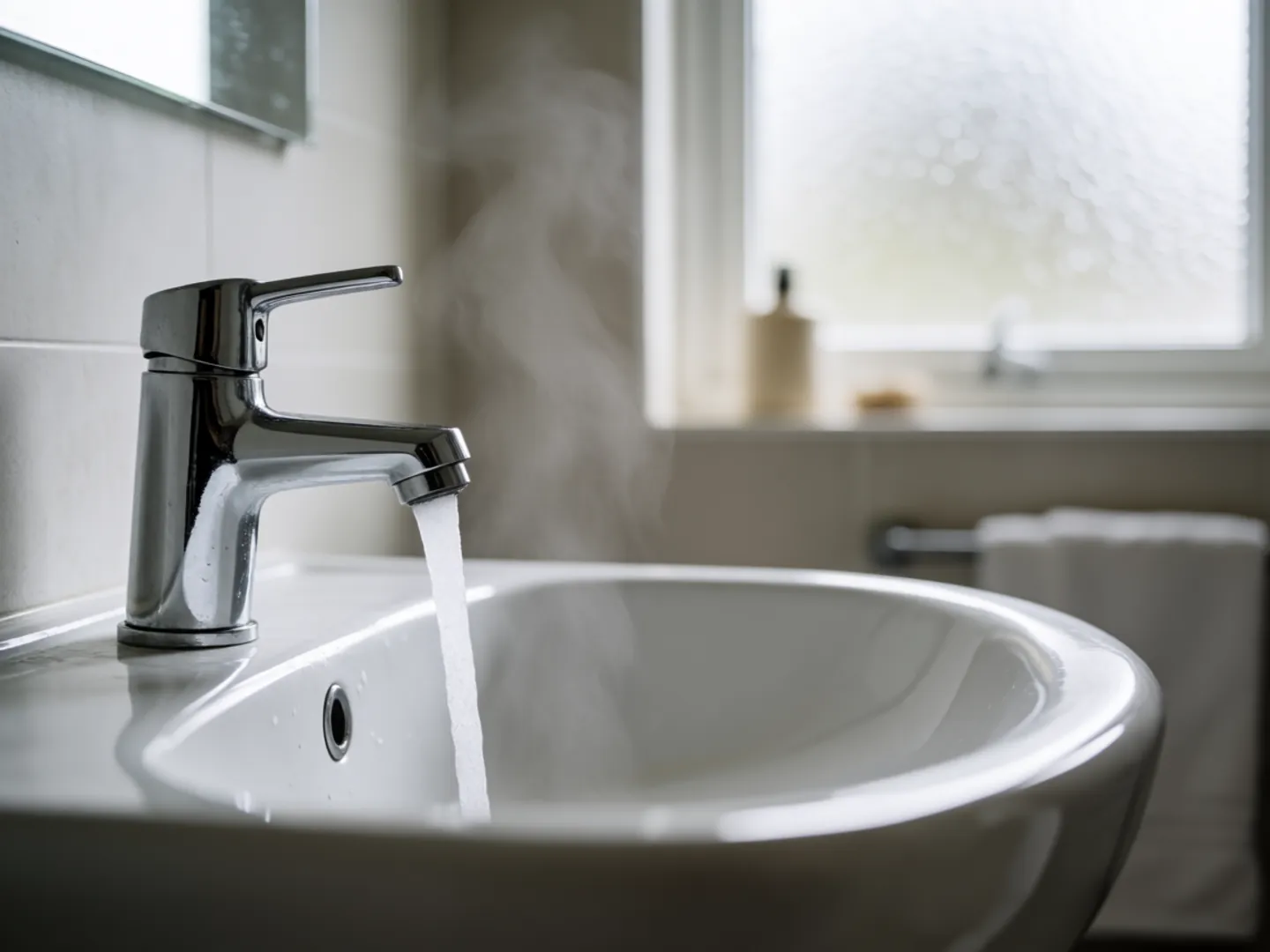
06WHY THE BACKUP MATTERS
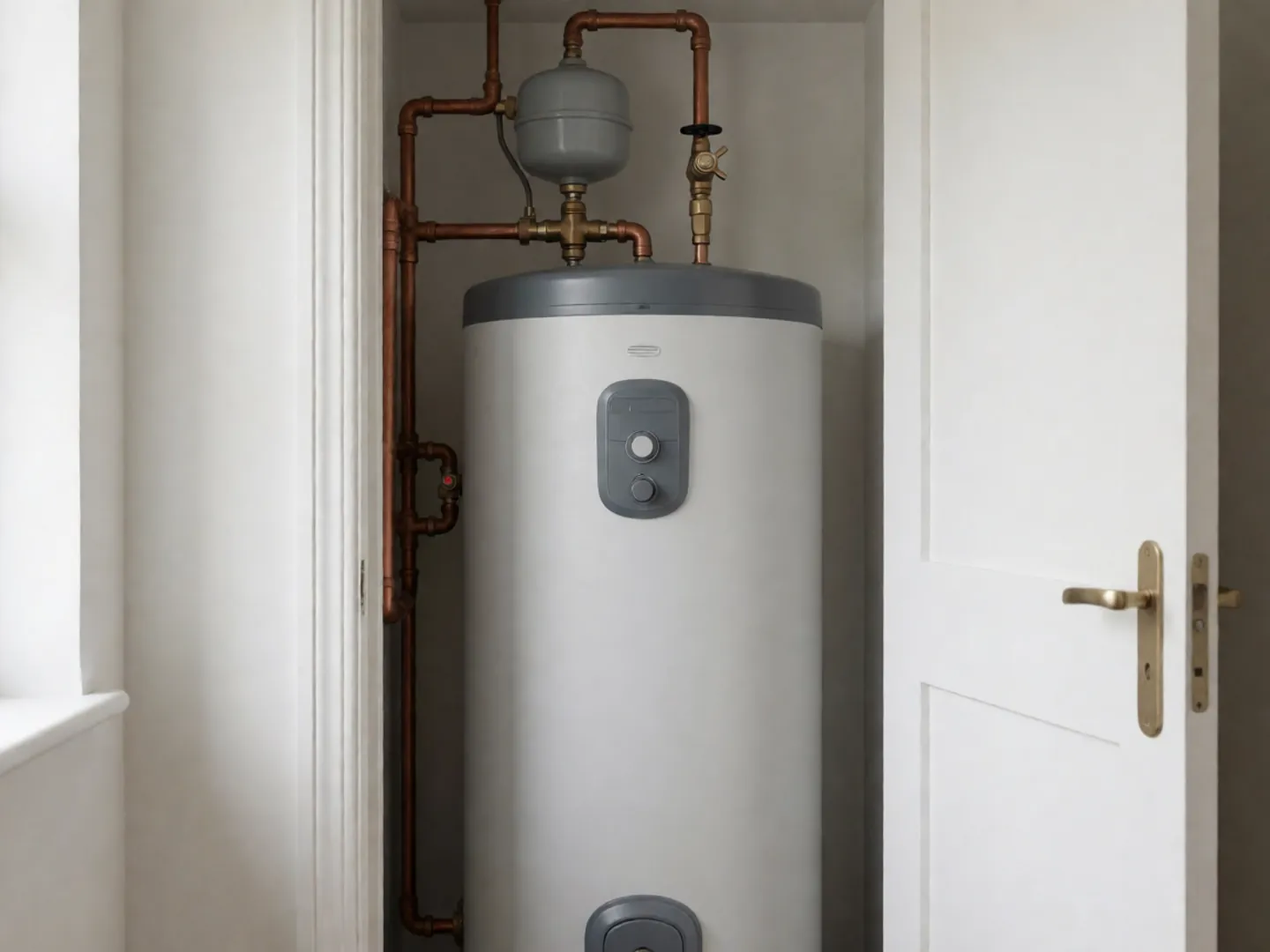
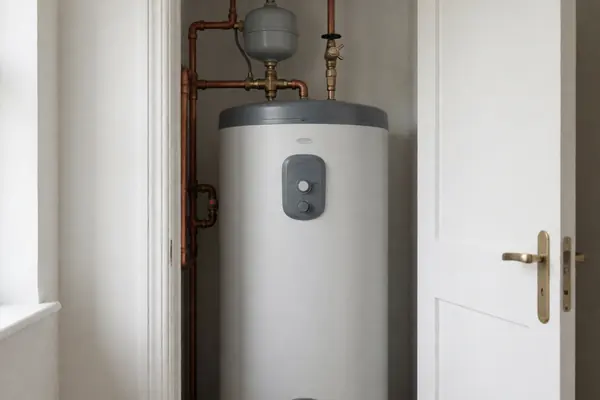
Because solar energy varies through the year, the Energy Saving Trust says a system is unlikely to meet all your hot water needs, especially in winter. A boiler or immersion heater, often on a coil or element near the top of the cylinder, makes up the difference.
HSE guidance on hot water systems also says hot water should be stored at 60°C at least to kill legionella bacteria. Ask your installer how your cylinder and controls are set up to reach that.
07Questions
Usually not. The Energy Saving Trust says most systems are designed to provide hot water for baths, showers and hot taps only, so you will still need another way to heat your home, such as a heat pump.
Few combi boilers are compatible, because they are not designed to heat water in a cylinder. The Energy Saving Trust says you would likely need to add a solar cylinder and replace the boiler with a conventional boiler or a heat pump.
Most solar water heating systems count as permitted development. The Energy Saving Trust lists exceptions such as listed buildings, conservation areas and national parks. The Planning Portal adds that building regulations normally apply, including checking the roof can carry the weight.
The Energy Saving Trust suggests a thorough check every five years to flush the system and replace the fluid mix, perhaps a shorter annual check, using any holiday function while you are away and watching the control panel for warnings.
The Energy Saving Trust says that if your roof suits solar collectors, it is worth also considering solar panels for renewable electricity, and suggests its solar panel calculator to see what might work for you.
08Sources
ABOUT THIS NAME
homesolarbackup.com is part of the DoodleSale portfolio. It isn't in an auction right now, but you can ask about leasing it.